Chemical Structure Of Local Anaesthetics
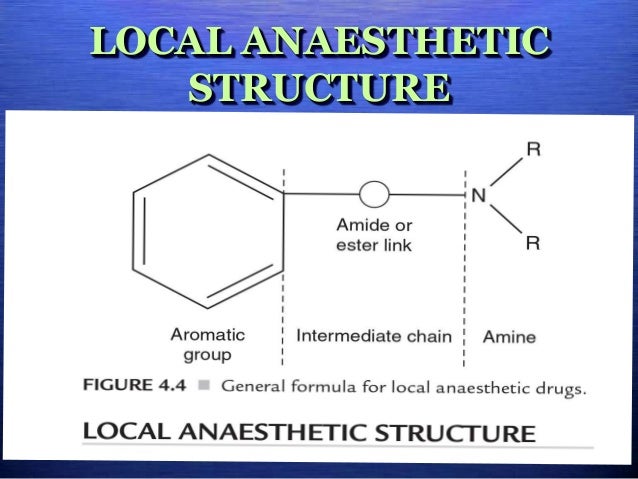
In most cases, this follows their diffusion through the neural membrane into the axoplasm, where they enter sodium channels and prevent them from assuming an active or “open” state. The local anesthetic molecule consists of 3 components: (a) lipophilic aromatic ring, (b) intermediate ester or amide chain, and (c) terminal amine. Cocaine is a naturally occurring compound indigenous to the Andes Mountains, West Indies, and Java. It was the first anesthetic to be discovered and is the only naturally occurring local anesthetic.
Open Access is an initiative that aims to make scientific research freely available to all. To date our community has made over 100 million downloads. It’s based on principles of collaboration, unobstructed discovery, and, most importantly, scientific progression. As PhD students, we found it difficult to access the research we needed, so we decided to create a new Open Access publisher that levels the playing field for scientists across the world.
By making research easy to access, and puts the academic needs of the researchers before the business interests of publishers. Local anaesthetics are commonly used drugs in clinical anaesthesia.
The knowledge of their pharmacology is paramount for safe and optimal use of this group of drugs. This chapter consists of two sections.
The first section will address the chemical and physical properties, pharmacokinetics and pharmacodynamics of the local anaesthetics. In the second section, examples of the commonly used doses and additives used for various peripheral and regional anaesthetics will be discussed. We will also address the treatment of toxicity as a result of inadvertent intravascular injection of the local anaesthetics. Summary points1. Local anaesthetics block the transmission of pain from the nerve endings into the central nervous system. Chemically, they are classified as esters and amides depending on the intermediate chain between the lipophilic aromatic ring and the hydrophilic amine group.2. The primary mode of action is blockade of the fast voltage‐gated sodium channels.
To achieve this effect, the unionised fraction of the drug crosses the lipid bilayer of the axoplasm and blocks the channel intracellularly.3. The duration and density of the block depend on both the volume and concentration of the agent used.4. Factors that influence the efficacy of local anaesthetics are the pH, pKa, lipid solubility, protein binding and the length of the intermediate chain. Efficacy can be augmented by use of adjuncts such as adrenaline, opioids, alpha 2‐adrenergic agonists (clonidine) and alkalinisation.5. Toxicity is related to the site of injection, the vascularity of the site and the injected dose. The use of vasoconstrictors may reduce toxicity due to reduction in systemic absorption.6. From the local anaesthetics in clinical use, racemic bupivacaine has the highest affinity for the sodium channels and is the most difficult to manage in the event of systemic toxicity. IntroductionLocal anaesthetics are drugs that block conduction of electrical impulses in excitable tissues. These tissues include the nerve cells and myocytes (both cardiac and skeletal muscles). Analgesia and anaesthesia occur as a result of the blockage of electrical impulses.
Other local anaesthetics like lidocaine also possess Class I antiarrhythmic properties. Before a detailed venture into the physical‐chemical properties and mechanism of action of this class of drugs, a brief overview of the nerve anatomy is discussed. This will aid in the overall understanding of how these agents work and how their efficacy and safety can be improved by the use of appropriate doses and adjuncts.
Figure 1.Structure of a neuron. Source: Used with permission.Peripheral nerves contain both afferent and efferent fibres, which are bundled into one or more fascicles as illustrated in. Individual nerve fibres within the fascicle are surrounded by a layer of loose connective tissue called the endoneurium. The endoneurium houses the glial cells, fibroblasts and blood vessel capillaries, all of which are integral to the function of the nerve fibre. The fascicle is in turn surrounded by a dense layer of collagenous connective tissue called the perineurium. A cylindrical sheath called the epineurium forms the outermost layer of a peripheral nerve. The main function of these layers is to protect the nerve fibres and also act as barriers to agents acting on the nerves including local anaesthetics.
Local Anaesthetic Drugs
Electrophysiology of nerve conductionThe resting membrane potential of a nerve cell is in the range of −60 to −70 mV. At rest, neurons are more permeable to potassium ions due to the presence of potassium leak channels. This explains why the resting neuronal membrane potential is closer to the equilibrium potential of potassium of −80 mV. The ionic disequilibria acts as the energy needed for propagation of action potentials on the cell surface. The intracellular milieu of the nerve cell is negatively charged relative to the extracellular. Upon excitation of the nerve fibres, the electrical impulse propagates along the axon as a result of changes occurring in the adjacent membrane alternating from negative to positive values of about +50 mV due to rapid influx of sodium ions.
At an electrical potential of +50 mV, there is rapid efflux of potassium ions in an attempt to maintain electrical neutrality of the cell. To restore the resting membrane potential, the sodium/potassium ATPase pumps sodium extracellularly, while the opposite happens to the potassium ions. The conduction of impulses along nerve fibres occurs as small brief, localised spikes of depolarisation on the surface of the cell membrane. Impulses travel in one direction as the axonal membrane that has just undergone depolarisation remains in the refractory state until the resting potential is restored by the Sodium/Potassium ATPass pumps on. Illustrates the sequence of events occurring during the propagation of the action potential. Structure-activity relationship of local anaestheticsLocal anaesthetics consist of a hydrophilic amine and a lipophilic aromatic ring connected by an intermediate chain. The structural bond in the intermediate chain determines whether the local anaesthetic will be classified as an ester or an amide.
Furthermore, the bond in the intermediate chain determines the pathway of metabolism of the compound. Ester local anaesthetics are metabolised by plasma pseudocholinesterases, whereas the amides are metabolised in the liver by the cytochrome family of enzymes.illustrates the structure of an ester and amide local anaesthetic showing clearly the bonds in the intermediate chains. Mechanism of action of local anaestheticsLocal anaesthetic blocks the transmission of nerve impulses by reversibly blocking the fast voltage‐gated sodium channels, thereby inducing analgesia and anaesthesia.
Physicochemically, local anaesthetics are weak bases that are formulated in an acidic milieu, hence containing a larger proportion of the drug in the ionised state. However, it is the unionised fraction that is able to cross the lipid bilayer neuronal membrane and block the voltage‐gated sodium channels from the inside of the axoplasm.
This blockade renders the sodium channel inactive, and hence, no further conduction of impulses occurs. Diagramatically this is well demonstrated. Determinants of physiological activities of local anaestheticsThe activity of local anaesthetics is influenced by a number of factors. These include the pH of the surrounding tissue, the lipid solubility of the local anaesthetic, pKa, the bond in the intermediate chain and its length and the protein binding of the particular local anaesthetic in question. Details of how each of these factors influence the activity of local anaesthetics is discussed below:.pKa: The pKa is the pH at which the number of ionised and unionised fractions of the drug is in equilibrium. The lower the pKa, the more the unionised fraction is present for any given pH and hence the faster the onset of action.pH: The lower the pH, that is, acidic milieu, the less the potency because in acidic conditions the ionised fraction predominates, there is less of the unionised fraction, and there is less of the local anaesthetic available to cross the lipid bilayer and block the voltage‐gated sodium channels. This explains why local anaesthetic does not have much efficacy in reducing pain in infected tissues like abscesses in which the pH of such tissues is much lower than the physiological pH of 7.4.Lipid solubility: The more lipid soluble the local anaesthetic is, the higher the potency, the faster the onset of action and the longer the duration of action.
This is because there are more drug molecules able to cross the lipid bilayer of the neuronal membrane and create a ‘depot’ of the drug from within the axoplasm.Intermediate chain: The longer the intermediate chain, the more potent the local anaesthetic. Bupivacaine has a longer intermediate chain compared to lidocaine. Bupivacaine is three to four times more potent than lidocaine.Protein binding: Local anaesthetics with higher degrees of protein binding have longer duration of action.Depending on the type of nerves and their fibres, the sequence of blockade of the nerve fibres is illustrated in. Specific local anaestheticsAs discussed above, local anaesthetics are classified as ester and amides.
Amethocaine also known as tetracaine and cocaine is the ester of clinical importance.Cocaine was first introduced into clinical practice in 1884. It was first used in ophthalmic surgery and later in dental surgery. Currently, it is mainly used topically in ear, nose and throat (ENT) surgeries at a concentration of 4–10%. The onset of action is fast and lasts 20–30 min. Due to its ability to sensitise adrenergic receptors, it is relatively contraindicated in patients known with hypertension and ischaemic heart diseases.
Concurrent use of adrenaline is contraindicated because cocaine is a potent vasoconstrictor.Amethocaine (tetracaine) is another ester used widely in clinical practice. It was introduced in 1930 for ophthalmics/ophthalmology and as a cream for use to locally anaesthetise venepuncture sites, especially in the paediatric population. The onset of action is relatively fast with a long duration of action. A maximum dose of 1 mg/kg is recommended. It is the least metabolised of ester local anaesthetics and hence possesses a higher risk of toxicity. Other ester local anaesthetics in use include benzocaine, prilocaine and 2‐chloroprocaine.Some of the amide local anaesthetics exhibit isomerism.
Previously, sold drugs were racemic mixtures containing both the levo and dextro enantiomers. The levorotatory enantiomers of local anaesthetics are typically less neural and cardiotoxic than dextrorotatory enantiomers. For this reason, most clinicians had a preference/opted for pure enantiomers. With the introduction of better monitoring and ultrasound‐guided blocks, the racemic mixtures are making their way back into clinical practice as they tend to have a longer duration of action.Lidocaine was the first amid local anaesthetics to be introduced in 1948. It remains one of the most widely used anaesthetics as it can be used intravenously, intrathecally and as a local infiltration. It is also a Class 1b antiarrhythmic drug. It has a fast onset of action due to its pKa of 7.8, which is closer to the physiological pH of 7.4, and is moderately water and lipid soluble.
It has a moderate duration of action and is the least toxic of all amides probably due to its relatively low protein‐binding capacity of 64%. The addition of adrenaline, a vasoconstrictor, reduces its toxicity allowing for higher doses to be used for local tissue infiltrations. The recommended doses are 3 mg/kg without adrenaline and 7 mg/kg with adrenaline, respectively. Concerns have been raised over neurotoxicity with lidocaine making it much less popular in recent years for intrathecal usage.
For localised procedures such as hand surgeries, 0.5% lidocaine intravenously post‐exsanguination of the limb is still a widely used technique introduced by August Biers in 1908.Mepivacaine is an intermediate duration of action compared to lidocaine and bupivacaine. It was introduced in 1957. It has a p K a of 7.6. It has similar pharmacokinetic and dynamic properties with lidocaine except for some concerns of it being neurotoxic in the neonate. However, its properties of low rates of systemic toxicity, rapid onset and dense motor block make mepivacaine attractive for procedures such as shoulder surgery.Ropivacaine was introduced in 1976.
It has a p K a of 8.2. Its chemical structure is similar to both mepivacaine and bupivacaine. Ropivacaine is available as a pure levorotatory stereoisomer only. It is a pure enantiomer and less cardiotoxic compared with racemic mixtures of other local anaesthetics. With respect to its better safety profile, ropivacaine has become a preferred long‐acting local anaesthetic for peripheral nerve block anaesthesia for many providers. The motor block sparing properties associated with ropivacaine spinal and epidural analgesia may provide an advantage over bupivacaine.
Despite its safety profile, all standard precautions pertaining to use of local anaesthetics are encouraged as they have been incidences of cardiovascular collapse reported with its use.Bupivacaine exists as levo and dextro enantiomer. Its racemic form was introduced in 1963, while levobupivacaine was introduced in 1995. It has a p K a of 8.1 and a protein binding of 96%. The higher degree of protein binding makes bupivacaine the longest acting and most cardiotoxic local anaesthetic if inadvertently administered intravenously.
It has been used successfully over the years since its introduction and has become the yardstick for all other long‐acting local anaesthetics. Interestingly, at low concentration, bupivacaine has the propensity for sensory blocks while mildly sparing the motor blocks (differential sensitivity). This property allows for ‘walking epidural’ in labour analgesia.
The maximum recommended dose is 2 mg/kg with or without adrenaline as there is only a modest increase in the duration of action when combined with a vasoconstrictor. It is three to four times more potent than lidocaine, but the onset of action is much slower. Local anaesthetic-induced neurotoxicityLocal anaesthetics exert a direct time and dose‐dependant toxicity on neurons and myocytes. The mere injection of local anaesthetics perineurally or intrathecally is a risk factor for perioperative nerve injury. Local anaesthetic‐induced nerve injury may occur at clinical concentration levels when accidentally injected intrafascicularly. In an experimental model, axonal degeneration has been noticed in such instances.Some local anaesthetics are packaged in concentration much higher than used in clinical practice.
Care should be taken to prepare a safe dilution to reduce the risk of nerve toxicity. The outer layer of connective tissue surrounding the nerve fibre, the perineurium, forms the ‘blood‐nerve barrier’ and protects the nerve from chemical injury. The correct dilution of local anaesthetics will ensure that the concentration in the perineural and intraneural milieu is within the therapeutic range, thereby avoiding neural damage. The use of adjuncts to increase the viscosity of the solution also has been associated with increased incidence of nerve injury.
The use of hyperbaric solution in continuous spinal anaesthesia cases leads to the pooling of the solution in the caudal dural sac and prolongs the toxic effect on the nerve fibres (i.e. Cauda equina syndrome). Transient neurologic syndrome after a single bolus of lignocaine for spinal anaesthesia has been reported as well, though with a good outcome in the short term.
Lignocaine seems more prone to cause local anaesthetic neurotoxicity than bupivacaine with risk of 6.5 as high as bupivacaine probably due to the former's lower pKa, and hence, more unionised drug crosses into the axoplasm. Incidence and risk factorsThe true incidence of local anaesthetic‐induced neurotoxicity is difficult to account for as there are many confounding risk factors in the perioperative period that can lead to nerve injury. Large prospective studies have shown that the overall incidence of neurologic complication with peripheral nerve block technique is. PathophysiologyThe mechanism of this neurotoxicity at a cellular level is not well elucidated.
The postulated mechanisms involve the intrinsic caspase pathway, the phosphoinositide 3‐kinase (PI3K) pathway and the mitogen‐activated protein kinase (MAPK) pathway, but there is no consensus on what the predominant pathway may be ,. The interaction of the local anaesthetic and the voltage‐gated sodium channel (VGSC) and G‐coupled protein receptors is unlikely to be the pathophysiological pathway through which local anaesthetics exert their neurotoxicity. A study using tetrodotoxin, another sodium channel blocker, does not support that hypothesis. Local anaesthetic-induced muscle toxicityLocal anaesthetics cause muscle damage after intramuscular injection.
The effect is more pronounced with potent and long‐acting local anaesthetic like bupivacaine. These effects on skeletal muscle are transient and with full recovery within 2 weeks.The tissue toxicity may also be the result of preservative used to maintain stability of drug molecules in solution.
Sodium bisulphite and ethylene glycol tetra acetic acid are thought to be the culprits for the neurotoxicity of chloroprocaine. Systemic toxicitySystemic toxicity from local anaesthetics is closely related to the systemic concentration achieved either through excessive dose or inadvertent intravascular injection of local anaesthetics. The cardiovascular system and central nervous system are the most affected systems, the latter being more sensitive than the former. This entails that the local anaesthetic blood concentration required to produce the toxic sign and symptoms is lower for the CNS than for the cardiovascular system (CVS). This translates in clinical practice as the appearance of signs and symptoms of CNS toxicity first, followed by those of the CVS. However, caution needs to be exercised here as when a patient is having a conscious sedation or a full general anaesthetic, the CNS toxicity may be masked and the cardiotoxicity in the form of cardiovascular collapse may be the only manifestation of the local anaesthetic toxicity.
The main risk factors for developing systemic toxicity are:.extremes of age (younger than 4 months or older than 79 years).pre‐existing heart conduction abnormality.ischaemic heart disease.renal dysfunction.hepatic dysfunction.pregnant women.injection at a highly vascular site (e.g. Intercostal block). The excitatory phaseThe earliest symptom is usually the metallic taste, followed by circumoral numbness, light‐headedness, dizziness, visual disturbances, disorientation, tinnitus and agitation.
During this period, signs of toxicity include shivering, muscular twitching, tremor and generalised tonic‐clonic convulsion. The generally accepted explanation for this sequence of events is that the inhibitory neurons are the first to be blocked by local anaesthetics leaving the activity of the excitatory neurons unopposed. The depression phaseThe muscle twitches and convulsion subsides, followed by respiratory depression and respiratory arrest. The respiratory depression will lead to hypoventilation and raised plasma pCO 2 and a state of respiratory acidosis which will potentiate the CNS toxicity of local anaesthetics.
Apr 8, 2019 - The best Fallout 4 mods. 475K subscribers. FALLOUT 4: Enabling Modding for PC (UPDATED) Watch later. 58K subscribers. Fallout 4 Mods: True Storms - Wasteland Edition. 3.3K subscribers. A comprehensive bugfixing mod for Fallout 4. The goal of the Unofficial Fallout 4 Patch (aka UFO4P) is to eventually fix every bug with Fallout 4 not officially.  If you continue to use our website, we will assume that you are happy to receive all cookies. Our Cookie Policy has further details. Mar 1, 2018 - We've collected the best Fallout 4 mods for gameplay enhancements, visual improvements, new weapons and gear, and more.
The explanation for this increased CNS toxicity relies on the fact that raised plasma CO 2 level increases its diffusion into the cell, therefore decreasing the intracellular pH. The acidic intracellular environment will favour the conversion of the unionised local anaesthetics to the ionised form, which will be unable to diffuse out of the cell leading to a phenomenon known as ion trapping. Decreased plasma binding of local anaesthetics and increased cerebral blood flow contribute to the increased delivery of local anaesthetics to the brain, and this too increases the likelihood of CNS toxicity.The clinician needs to be aware of these facts as they will influence the approach to management of the CNS toxicity of local anaesthetics. Cardiovascular system toxicityThe effect of local anaesthetics on the cardiovascular system is direct and indirect. They affect the heart directly through the decrease in the rate of depolarisation of conducting cell and cardiomyocytes secondary to the block of voltage‐gated sodium channel. There is a decrease in the duration of action potential and refractory period ,.
Local Anesthesia Injection Names
Various local anaesthetics have a different degree of disruption of the conduction of action potential through the heart. Bupivacaine depresses the conduction to a greater degree than lignocaine. It produces cardiovascular toxicity at a lower concentration than that of lignocaine and has a worse outcome after cardiac resuscitation.
However, ropivacaine and levobupivacaine, a pure S‐enantiomer of bupivacaine, do not share this tendency for greater cardiac toxicity.A raised plasma level of local anaesthetics first prolongs the duration of conduction in the atrium and ventricle noticed on an electrocardiogram as PR interval prolongation and QRS complex widening. The spontaneous pacemaker activity is depressed at a higher plasma level resulting in bradycardia and sinus arrest successively. Ventricular arrhythmia occurs more often with bupivacaine than lignocaine, with an increased risk in pregnant patients. Apart from conduction disturbance, local anaesthetics also have a negative inotropic activity on the heart through interference with sarcolemmal sodium and calcium channel activities.Low concentration of local anaesthetics causes vasoconstriction, and higher concentration causes vasodilation with the exception of cocaine, which consistently produces vasoconstriction regardless of the concentration. Management of local anaesthetic toxicityThe management of cardiovascular toxicity is based on sound understanding and implementation of the basic principle of cardiopulmonary resuscitation. The steps for effective management of CNS toxicity of local anaesthetics include:.Stop injection or infusion of the agent.Call for help and start basic life support.Airway management: administer 100% O 2 to prevent hypoxaemia, ventilate the patient to prevent hypercarbia, and acidosis which potentiate the CNS toxicity of local anaesthetics.
Ensure the patency of airway: if the patency of the airway is compromised or patient is unable to maintain the airway, securing the airway endotracheal tube and subsequent ventilation is recommended.Suppress seizures with the use of benzodiazepines or induction of a full general anaesthesia.In case of a cardiovascular collapse, effective chest compression as per the advanced cardiac life support (ACLS) guideline should commence. Clinicians need to be aware that CPR in a setting of local anaesthetics cardiac toxicity will require prolonged effort and dosage adjustment (limit epinephrine bolus doses to. Commonly used Adjuvants to local anaesthetics in clinical practiceLocal anaesthetics added to the number of anaesthetic techniques to accommodate various patient groups depending on the type of surgery and patient’s functional status. Amide local anaesthetics (LA) are the most widely used in modern clinical anaesthetic practice. However, Anaesthesiologists still awaits development of an ideal LA with longer duration of action, better nerve fibre selectivity, a lesser degree of motor blockade and lower incidences of systemic toxicity. In this quest, multiple adjuvants have been used in clinical practice with varying results.
This section aims to discuss the adjuvants to LA for nerve blocks, spinal anaesthesia, caudals and epidural anaesthesia. The actual techniques and complications are beyond the scope of this chapter. Adjuvants to local anaesthetics (LA)1.
OpioidsThe use of neuraxial opioids in human subjects dates back to 1979 ,. Since then, they have been proven to provide effective and prolonged analgesia. In addition, this synergy allows for decreased LA doses with the hope to reduce the incidence of hypotension for similar pain relief. Combining LA with intrathecal morphine has been shown to prolong analgesic effect after lower limb arthroplasty and spinal anaesthesia –. Epidural opioids also provide similar analgesic benefit although only limited to 6 h following joint arthroplasty.
These benefits have to be balanced against a high incidence of side effects including respiratory depression (which may be delayed up to several hours post‐administration), nausea, vomiting and urinary retention. The evidence for analgesic benefit of using opioids in brachial plexus blocks over systemic administration is scanty.Fentanyl has a more rapid onset and shorter duration of action in comparison with more hydrophilic opioids such as morphine when administered neuraxially. The recommended intrathecal dose is 10–25 μg, and the epidural loading dose is 50–100 μg.
It does not prolong motor block thus allowing for early ambulation. The duration of action is 2–4 h, and the risk of respiratory depression is very low and of short duration.Morphine: a hydrophilic drug less readily absorbed in the spinal cord resulting in slower onset but prolonged duration of analgesia, and as it moves cephalad via CSF, the analgesia spreads over more dermatomes. However, this late cephalad spread increases the potential for brainstem binding and delayed respiratory depression although very rare in clinical practice. The recommended dose is 50–300 μg intrathecal and 2–5 mg epidural loading dose. The risk of side effects increases exponentially with the increase in the dose.Diamorphine: a diacetylated analogue of morphine with a potency of approximately 1.5–2 times that of morphine resulting in a faster onset and slightly shorter duration of action. The intrathecal dose is 300–400 μg, and epidural loading dose is 2–3 mg.Sufentanil: an intrathecal dose is 2.5–10 μg, and epidural loading dose is 10–50 μg. It is an extremely potent opioid with a faster onset of action.
Its use in clinical practice is limited by its short duration of action and high side effect profile.2. Alpha‐2 adrenoceptor agonistsClonidine: intrathecal use of clonidine as an adjunct to local anaesthetics prolongs the duration of sensory blockade by approximately 1 h. However, the duration of motor blockade is increased, and the incidence of hypotension is also high. The recommended dose for intrathecal use is in the range of 15–150 μg with the incidence of adverse effects (bradycardia, sedation, hypotension) increasing with doses above 150 μg. In paediatric anaesthesia, the use of clonidine (1 mg/kg) for caudal blocks doubles the duration of analgesia when compared to LA alone, but causes sedation. Further research is needed to examine the benefits of using clonidine for peripheral nerve and plexus blocks.Dexmedetomidine is a highly selective alpha‐2 adrenoceptor agonist. There is some evidence to suggest a clinical benefit to use of dexmedetomidine with LA for intravenous regional anaesthesia.Adrenaline has direct and indirect actions as an adjuvant.
It acts directly on α‐2 adrenoceptors in the substantia gelatinosa of the dorsal horn of the spinal cord resulting in presynaptic inhibition of transmitter release from C and Aδ fibres. Indirectly, it causes local vasculature constriction thus prolonging the duration of action of the LA. Adrenaline used as an adjunct to thoracic epidural infusions improves the quality of analgesia ,. There are conflicting reports regarding the use of adrenaline in lumbar epidurals.3. N‐methyl‐d‐aspartate receptor antagonistsKetamine: preservative‐free ketamine injected into the caudal epidural space for children at a dose of 0.5 mg/kg has been shown to extend analgesia time by several hours. The opponents of ketamine cite increased the risk of psychotomimetic side effects, but the use of benzodiazepine premedication prior to block reduces the risk of these side effects.Magnesium: intrathecal or epidural magnesium has been used with variable results.
It may prolong LA/opioid block in women in labour at a dose of 50 mg, but a very high dose of magnesium has been reported to produce transient neurological toxicity.Other adjuvantsOther adjuvants like midazolam and neostigmine have been suggested to improve the quality of analgesia. However, the high incidence of significant side effects far outweighs the small improvement in analgesia. Commonly used recipes in clinical practice.Spinal anaesthesia (SA) for caesarean deliveryThe ideal subarachnoid dose of local anaesthesia for caesarean delivery has been debated for a long time. Most anaesthetists employ hyperbaric 0.5% bupivacaine in a dose of 7.5–15.0 mg. A meta‐analysis suggests any reduction in the bupivacaine dose during single‐shot SA to less than 8 mg with opioid or 10 mg alone, resulting in a significantly increased requirement for analgesic supplementation and possibly conversion to general anaesthesia. The practice at our institution is to use 10 mg of hyperbaric bupivacaine plus 10 μg fentanyl with satisfactory results.Labour epidural analgesiaThe current policy at our institution is to draw up a mixture of 5 mL of 0.5% bupivacaine, 4 mL saline and 50 μg fentanyl, that is, a total of 10 mL of 0.25% bupivacaine with 5 μg/mL fentanyl, and to administer two 4 mL boluses of this mixture 3 min apart, with the patient in the left lateral position for the first bolus and the right lateral for the second.
In early labour, an initial bolus of 8 mL of 0.125% bupivacaine may be given, followed by a repeat dose of a similar volume. The aim is to obtain levels of T8–T10 bilaterally, and this can take up to 20 min. Analgesia is maintained with an infusion of 0.125% bupivacaine plus 2 μg/mL fentanyl at the rate of 8–14 mL/h.Top‐up of labour epidural for caesarean delivery step‐by‐step.Draw up 17 mL 2% lignocaine, plus 50 μg fentanyl, 1 mL 8.4% sodium bicarbonate and 1 mL 1/10,000 adrenaline (i.e. 1 mL of an ampoule which has been diluted 10 times).
This makes a total of 20 mL, with approximately 1/200,000 adrenaline.Administer 5 mL boluses after a test dose.Unless the initial dose of epidural bupivacaine has been administered within the previous hour, treat as though the patient has no block at all. Most patients will require between 16 and 22 mL for an effective block to T4.Conversion to spinal anaesthesia may result in a high block if there has been an unsuccessful attempt at a top‐up with a large volume of local anaesthetic.A poorly functioning epidural catheter is best re‐sited, or spinal anaesthesia may be performed using a reduced dose (unpredictable), or general anaesthesia may be preferred.Local anaesthetics for regional intravenous anaesthesiaRegional intravenous anaesthesia is indicated for short operative procedures for extremities and sometimes for pain therapy (e.g. Treatment of complex regional pain syndromes).
This is a very basic technique, and it requires 12–15 mL of 2% lidocaine or 30–40 mL of 0.5% lidocaine for upper extremity regional anaesthesia. Other local anaesthetics such as bupivacaine are contraindicated for IV injection for reasons discussed in the toxicity section. Jesse Musokota Mumba, Freddy Kasandji Kabambi and Christian Tshebeletso Ngaka (February 8th 2017). Pharmacology of Local Anaesthetics and Commonly Used Recipes in Clinical Practice, Current Topics in Anesthesiology, Riza Hakan Erbay, IntechOpen, DOI: 10.5772/67048. Available from: Jesse Musokota Mumba, Freddy Kasandji Kabambi and ChristianTshebeletso Ngaka (February 8th 2017).
Pharmacology of Local Anaesthetics and Commonly Used Recipes in Clinical Practice, Current Topics in Anesthesiology, Riza Hakan Erbay, IntechOpen, DOI: 10.5772/67048. Available from.
Chapter 3 Local Anaesthetic Drugs AimThe aim of this chapter is to describe the drugs that are used during dental local anaesthesia. OutcomeAfter reading this chapter you should have an understanding of the drugs used in dental local anaesthesia and be able to determine the most appropriate choice for particular treatments in individual patients.
Introduction and TerminologyTwo classes of drugs are encountered during dental local anaesthesia. These are the anaesthetic agents and vasoconstrictors. Various combinations are available in the UK in dental cartridges (Table 3-1). Local anaesthetic/vasoconstrictor combinations available in dental local anaesthetic cartridges in the UK.Vasoconstrictor-freeWith epinephrineWith felypressinLocal anaestheticLidocainePrilocaineMepivacaineArticaine = combination availableLocal anaesthetic drugs are classified by their chemical structure. Two types are used:.amides.esters.Similarly, vasoconstrictors are classified into two groups. These are:.catecholamines.synthetic polypeptides.In addition to the anaesthetic agent and the vasoconstrictor, the local anaesthetic solution contains other ingredients. As well as the solvent, which is Ringer’s solution, epinephrine- (adrenaline-)containing solutions include a reducing agent to prevent loss of properties of the catecholamine.
Previously, local anaesthetics had preservatives such as para-amino-benzoic acid included. These days most solutions are preservative-free. Amide Local AnaestheticsThe amide local anaesthetics that may be used in dentistry in the UK are:.lidocaine (lignocaine).prilocaine.mepivacaine.articaine.bupivacaine and levobupivacaine.ropivacaine.These are the approved non-proprietary names of the agents. Table 3-2 relates proprietary names to the approved version. At the time of writing, only the first four were available in dental local anaesthetic cartridges in the UK (Fig 3-1). Bupivacaine, levobupivacaine and ropivacaine anaesthetic solutions are supplied in standard hospital type vials. Therefore, they must be “drawn up” (Fig 3-2).
Proprietary names of local anaesthetics in the UK. Proprietary nameApproved nameChirocaineLevobupivacaineCitanestPrilocaineLignospanLidocaineLignostabLidocaineMarcainBupivacaineNaropinRopivacaineScandonestMepivacaineSeptanestArticaineXylocaineLidocaineXylotoxLidocaine. Fig 3-2 Some local anaesthetics are unavailable in cartridges in the UK and therefore must be drawn up from vials.The amide anaesthetics are the group almost exclusively used for injection in modern dentistry. In addition to having physicochemical properties, which confer a better anaesthetic profile than the esters, an important attribute of the amide group is the low potential for producing allergic reactions. Ester local anaesthetics are more likely to induce allergy. LidocaineLidocaine is the “gold standard” local anaesthetic drug. It has been used in dental anaesthesia for over 50 years (Fig 3-3).
When used for injection in dentistry it is provided as a 2% solution (20 mg/mL). Like all the other injectable agents described it is dissolved in solution as the hydrochloride salt. When used as a topical anaesthetic, a number of formulations and concentrations have been employed – for example, a 5% gel, a 10% spray or up to 20% incorporated into an adhesive patch. Fig 3-3 Lidocaine is available in a number of formulations for injection and topical use.Lidocaine, when used alone, does not provide long-lasting pulpal anaesthesia. When combined with epinephrine, reliable dental anaesthesia is achieved after injection by any of the standard methods described later in this book.
The plain solution can provide soft tissue anaesthesia, although the duration is less than that obtained when a vasoconstrictor is included in the formulation. In the UK 2% lidocaine is normally combined with epinephrine in a concentration of 1:80,000 (12.5μg/mL).
When used in infiltration and regional block anaesthesia, lidocaine with epinephrine can produce pulpal anaesthesia of about 45 minutes. Soft tissue anaesthesia lasts longer and altered soft tissue sensation may be present for 2 to 3 hour/.