Christie, Agatha Diez Negritos.rtf
- Los Diez Negritos Agatha Christie
- Christie Agatha Diez Negritos.rtf Full
- Christie Agatha Diez Negritos.rtf Video
Free Download And Then There Were None By Agatha Christie Rtf. Y No Quedo Ninguno Diez Negritos And Then There Were None.
May 17, 2019 Los diez negritos- Agatha Christie( radio novela ) luis sanchez. Unsubscribe from luis sanchez? Cancel Unsubscribe. Subscribe Subscribed Unsubscribe 0. PDF DJVU FB2 by Yasuyuki Horie' 2015-12-22T07:10:00+00:00 monthly 0.5. English ebook download Batek Negrito Religion: World-view and Rituals of a. Suomeksi PDF RTF by Agatha Christie 2015-12-14T00:25:00+00:00 monthly.
Publication date6 November 1939Pages272Preceded byFollowed byWebsiteAnd Then There Were None is a by English writer, her best selling novel and described by her as the most difficult of her books to write. It was first published in the United Kingdom by the on 6 November 1939, as Ten Little Niggers, after the, which serves as a major plot point.The US edition was released in January 1940 with the title And Then There Were None, which is taken from the last five words of the song. All successive American reprints and adaptations use that title, except for the Pocket Books paperbacks published between 1964 and 1986, which appeared under the title Ten Little Indians. The book is the world's best-selling mystery, and with over 100 million copies sold is one of the of all time. Publications International lists the novel as the sixth best-selling title. Contents.Plot summary On 8 August in the late 1930s, eight people arrive on a small, isolated island off the coast of. Each has an invitation tailored to his or her personal circumstances, such as an offer of employment or an unexpected late summer holiday.
They are met by Thomas and Ethel Rogers, the butler and cook-housekeeper, who state that their hosts, Mr. Ulick Norman Owen and his wife Mrs.
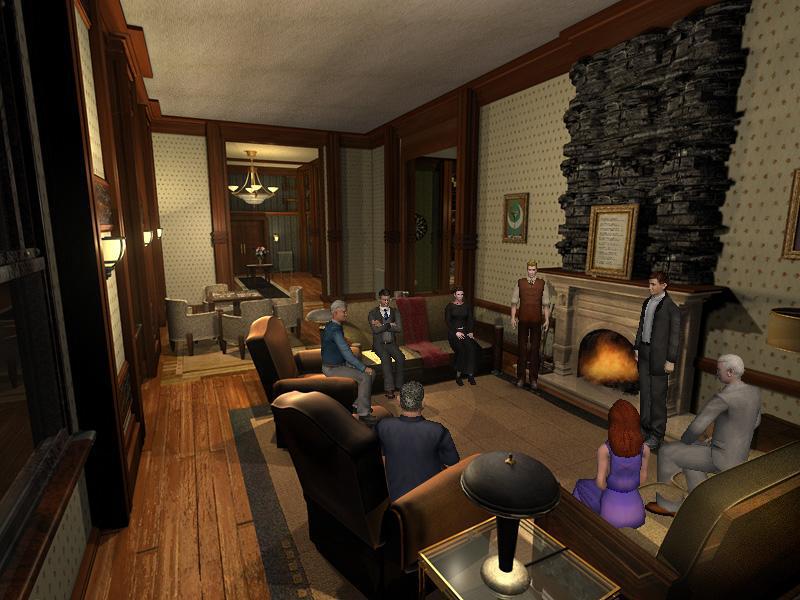
Una Nancy Owen, whom they have not yet met in person, have not arrived, but left instructions, which strikes all the guests as odd.A framed copy of a nursery rhyme, ' (called 'Ten Little Indians' or 'Ten Little Soldiers' in later editions), hangs in every guest's room, and ten figurines sit on the dining room table. After supper, a is played; the recording accuses each visitor of having committed, and then asks if any of 'the accused' wishes to offer a defence. Anthony Marston and Philip Lombard admit to the charges leveled against them, both instances of irresponsible endangerment resulting in death rather than murder as normally defined.They discover that none of them actually knows the Owens, and Justice Wargrave concludes that the name 'U.N. Owen' is a play on 'Unknown'.
Marston finishes his drink and immediately dies from. Armstrong confirms that there is no cyanide in the drinks Marston was served from, indicating he committed suicide.The next morning, Mrs. Rogers' corpse is found in her bed; she died in her sleep. The cause is unknown, but some of the guests suspect her husband of poisoning her for fear that she would confess to the crime they are charged with in the recording. By lunchtime, General MacArthur is found dead, from a heavy blow to his head. Three of the figurines are found to be broken, and again the deaths parallel the rhyme.The guests begin to suspect that U.N.
Owen is systematically murdering them. A search for Owen turns up no results. The island is a 'bare rock' with no hiding places, and no one could have arrived or left; thus, they conclude that one of the seven remaining persons is the killer. Wargrave leads the group in determining that so far, none of them can definitively be ruled out as the murderer. The next morning, Rogers is found dead while chopping wood. After breakfast, Emily Brent is found dead in the kitchen, where she had been left alone after complaining of feeling unwell; she had been injected with via a hypodermic needle.Wargrave suggests searching all the rooms, and any potentially dangerous items are locked up.
Lombard's gun is missing from his room. When Vera goes upstairs to take a bath, she is shocked by the touch and smell of seaweed left hanging from the ceiling of her room and screams; the remaining guests rush upstairs to her room.

Wargrave, however, is still downstairs. The others find him seated, immobile and crudely dressed up in the attire of a judge. Wargrave is examined by Armstrong and pronounced dead from a gunshot to the forehead.That night, Lombard finds his gun returned to his room.
Henry Blore catches a glimpse of someone leaving the house but loses the trail. Only Armstrong is absent from his room. Vera, Blore, and Lombard decide to stay together at all times.
In the morning, they signal to the mainland from outside by using a, but receive no reply. Blore returns to the house for food by himself and is killed by a heavy bear-shaped clock statue that is pushed from Vera's window sill, crushing his skull. Since neither of them were near the house when the death occurred, Vera and Lombard conclude that Armstrong is the killer.Vera and Lombard come upon Armstrong's body washed up on the beach. Each concludes the other must be the killer. Vera suggests moving the doctor's body past the shore as a gesture of respect for the dead, but this is a pretext. While they move the body, she lifts Lombard's gun.
When Lombard lunges at her to get it back, she shoots him dead.She returns to the house in a shaken dreamlike state, relieved to be alive. She finds a noose and chair arranged in her room, and a strong smell of the sea. Pressed by guilt over the crime she is accused of (causing the drowning of a boy in her charge because he held priority over her lover for his inheritance), she hangs herself in accordance with the last verse of the rhyme.officials are puzzled at who could have killed the ten. They reconstruct the deaths from Marston to Wargrave with the help of the victims' diaries and a 's report, and systematically determine that none of the last four victims (Armstrong, Blore, Lombard, or Claythorne) can be the killer, since there was some form of cleanup following all their deaths except Blore's (for example, the chair on which Vera stood to hang herself had been set back upright), and a suicide by falling clock seems beyond the realm of probability. Isaac Morris, a sleazy lawyer and drug trafficker, purchased the island, arranged the invitations, ordered the production of the gramophone record, and told the inhabitants of nearby Sticklehaven to ignore any signals for help, citing a bet about living on a 'desert island' for a week. However, Morris died of an overdose of on the night of 8 August.A fishing ship picks up a bottle inside its trawling nets; of the killings, which is then sent to Scotland Yard. In the confession, Justice Wargrave writes that all his life he has had two contradictory impulses: a sadistic love for causing the death of others, and a strong sense of justice.
For most of his life, he satisfied both desires through his profession as judge. However, the desire to commit murder with his own hands and his diagnosis with a motivated him to orchestrate a mass murder of people who were themselves murderers by his judgment but could not be prosecuted under the law. Before departing for the island, he gave Morris barbiturates to take for his indigestion. He tricked Armstrong into helping him fake his own death under the pretext that it would help the group identify the killer. He used the gun and some elastic to ensure his true death matched the account in the guests' diaries. Although he wished to create an unsolvable mystery, he acknowledges in the missive a 'pitiful human need' for recognition, hence the confession.Characters The following details of the characters are based on the original novel published in England.
Anthony James Marston, an amoral and irresponsible young man, killed two young children (John and Lucy Combes) while driving recklessly, for which he felt no real remorse and accepted no personal responsibility, complaining only that his driving licence had been suspended as a result. He was the first island victim. Mrs Ethel Rogers, the cook/housekeeper and Thomas Rogers' wife, described as a pale and ghost-like woman who walks in mortal fear. She was dominated by her bullying husband, who coerced her into agreeing to withhold the medicine of a former employer (Miss Jennifer Brady, an elderly spinster) in order that they might collect an inheritance they knew she had left them in her will. Mrs Rogers was the second victim. General John Gordon MacArthur, a retired war hero, who sent his late wife's lover (a younger officer, Arthur Richmond) to his death by assigning him to a mission where it was practically guaranteed he would not survive. Leslie MacArthur had mistakenly put the wrong letters in the envelopes on one occasion when she wrote to both men at the same time.
The general tells Vera that no one will leave the island alive. Thomas Rogers, the butler and Ethel Rogers' husband. He dominated his weak-willed wife, and they killed their former elderly employer by withholding her medicine, causing the woman to die from heart failure, thus inheriting the money she bequeathed them in her will. Despite his wife's death, Rogers was still serving the others.
Emily Caroline Brent, an elderly, religiously rigid, socially respectable spinster who accepted the vacation on Soldier Island largely due to financial constraints. Years earlier, she had dismissed her teenage maid, Beatrice Taylor, for becoming.
Beatrice, who had already been rejected by her parents for the same reason, drowned herself, which Miss Brent considered an even worse sin. The murderer put a bee into the room, in addition to murder by poison. ('A bumblebee stung one.' ). Dr Edward George Armstrong, a doctor, responsible for the death of a patient, Louisa Mary Clees, after he operated on her while drunk many years earlier. William Henry Blore, a former and now a private investigator, was accused of for a bribe from a dangerous criminal gang, which resulted in an innocent man, James Landor, being convicted and sentenced to life imprisonment. Landor, who had a wife and young child, died shortly afterwards in prison.
Blore arrived under the alias 'Davis' from South Africa, on the island for 'security work.' His true name is revealed on the gramophone recording. He denies the accusation against him from the gramophone recording, but later admits the truth to Lombard. Philip Lombard, a. Literally down to his last square meal when he met Isaac Morris who made the proposition which brought Lombard to the island, he carries a loaded revolver, as Morris had hinted he might wish to do. Lombard is accused of causing the deaths of a number of East African tribesmen, after stealing their food and abandoning them to their deaths.
Neither he nor Marston feels any remorse. He is the only one to theorize that U N Owen might be Wargrave, but the others reject this. He and Vera are the only victims not killed by Justice Wargrave. Vera Elizabeth Claythorne, a cool, efficient, resourceful young woman who is on leave from her position as a sports mistress at a third-rate girls' school. Her job as a governess was ended by the death of her charge, Cyril Hamilton.
Claythorne let the boy drown so his uncle Hugo Hamilton could inherit the family estate and marry her. Hugo rejected her when he somehow realized what she had done.
Los Diez Negritos Agatha Christie
Justice Lawrence John Wargrave, a retired judge, known as a ' for liberally awarding the in murder cases. Wargrave is accused of influencing the jury to hand a guilty verdict to Edward Seton, a man many thought was innocent of his crime of killing an old woman, and sentencing him to death unfairly. As the two policemen discuss at Scotland Yard, new evidence after Seton's execution proved Seton's guilt. Wargrave admits in his postscript that he has a lifelong hidden sadistic urge to kill, but only the guilty. Finding himself terminally ill, he devises and carries out this plot. Isaac Morris is a sleazy and unethical lawyer hired by Wargrave to purchase the island (under the name U N Owen), arrange the gramophone recording, and make arrangements on his behalf, including gathering information on the near destitute Philip Lombard, to whom he gave some money to get by and recommended Lombard bring his gun to the island. Morris's is the first death chronologically, as he died before the guests arrived on the island.
Morris was responsible for the addiction and suicide of a young woman through his activities. The victim was the daughter of a friend of Wargrave. A hypochondriac, Morris accepted a lethal cocktail of pills from Wargrave to help treat his largely imagined physical ailments. Fred Narracott, the boatman who delivered the guests to the island.
After doing so, he does not appear again in the story, although Inspector Maine notes it was Narracott who, sensing something seriously amiss, returned to the island as soon as the weather allowed, before he was scheduled to do so, and found the bodies. Maine speculates that it was the normalcy and ordinariness of the guests that convinced Narracott to do so and ignore his orders to dismiss any signals requesting help. Sir Thomas Legge and Inspector Maine, two detectives who discuss the case in the epilogue. They reason out the events of the case, but are stymied as to which was the murderer until the confession comes to light.Literary significance and reception Writing for of 11 November 1939, Maurice Percy Ashley stated, 'If her latest story has scarcely any detection in it there is no scarcity of murders. There is a certain feeling of monotony inescapable in the regularity of the deaths which is better suited to a serialized newspaper story than a full-length novel. Yet there is an ingenious problem to solve in naming the murderer', he continued.
'It will be an extremely astute reader who guesses correctly.' For (25 February 1940), Isaac Anderson has arrived to the point where 'the voice' accuses the ten 'guests' of their past crimes, which have all resulted in the deaths of humans, and then said, 'When you read what happens after that you will not believe it, but you will keep on reading, and as one incredible event is followed by another even more incredible you will still keep on reading. The whole thing is utterly impossible and utterly fascinating. It is the most baffling mystery that Agatha Christie has ever written, and if any other writer has ever surpassed it for sheer puzzlement the name escapes our memory. We are referring, of course, to mysteries that have logical explanations, as this one has. It is a tall story, to be sure, but it could have happened.'
Many compared the book to her novel (1926). For instance, an unnamed reviewer in the of 16 March 1940 said, 'Others have written better mysteries than Agatha Christie, but no one can touch her for ingenious plot and surprise ending. With And Then There Were None. She is at her most ingenious and most surprising. Is, indeed, considerably above the standard of her last few works and close to the Roger Ackroyd level.' Other critics laud the use of plot twists.
Maurice Richardson wrote a rhapsodic review in 's issue of 5 November 1939 which began, 'No wonder Agatha Christie's latest has sent her publishers into a trance. We will refrain, however, from any invidious comparisons with Roger Ackroyd and be content with saying that Ten Little Niggers is one of the very best, most genuinely bewildering Christies yet written. We will also have to refrain from reviewing it thoroughly, as it is so full of shocks that even the mildest revelation would spoil some surprise from somebody, and I am sure that you would rather have your entertainment kept fresh than criticism pure.' After stating the set-up of the plot, Richardson concluded, 'Story telling and characterisation are right at the top of Mrs Christie's baleful form. Her plot may be highly artificial, but it is neat, brilliantly cunning, soundly constructed, and free from any of those red-herring false trails which sometimes disfigure her work.' , a recent critic, concurred with the reviews, describing the book as 'Suspenseful and menacing detective-story-cum-thriller. The closed setting with the succession of deaths is here taken to its logical conclusion, and the dangers of ludicrousness and sheer reader-disbelief are skillfully avoided.
Probably the best-known Christie, and justifiably among the most popular.' The original title of the mystery ( Ten Little Niggers) was changed because it was offensive in the United States and some other places. Alison Light, a literary critic and feminist scholar, opined that Christie's original title and the setting on 'Nigger Island' (later changed to 'Indian Island' and 'Soldier Island', variously) were integral to the work. These aspects of the novel, she argued, 'could be relied upon automatically to conjure up a thrilling 'otherness', a place where revelations about the 'dark side' of the English would be appropriate.' Unlike novels such as, 'Christie's location is both more domesticated and privatized, taking for granted the construction of racial fears woven into psychic life as early as the nursery. If her story suggests how easy it is to play upon such fears, it is also a reminder of how intimately tied they are to sources of pleasure and enjoyment.' In the 'Binge!'
Article of Issue #1343-44 (26 December 2014–3 January 2015), the writers picked And Then There Were None as an 'EW favorite' on the list of the 'Nine Great Christie Novels'. Current published version of the rhyme.
Retrieved 29 April 2018. ^. Agatha Christie Limited. Retrieved 3 July 2018. ^ 'Review of Ten Little Indian Boys'. 5 November 1939. P. 6.
^ Peers, Chris; Spurrier, Ralph; Sturgeon, Jamie (1999). Collins Crime Club: a checklist of the first editions (2nd ed.). London, UK: Dragonby Press. P. 15.
^ Pendergast, Bruce (2004). Victoria, British Columbia: Trafford Publishing.
Christie Agatha Diez Negritos.rtf Full
Retrieved 16 October 2018. ^ Davies, Helen; Dorfman, Marjorie; Fons, Mary; Hawkins, Deborah; Hintz, Martin; Lundgren, Linnea; Priess, David; Clark Robinson, Julia; Seaburn, Paul; Stevens, Heidi; Theunissen, Steve (14 September 2007). Editors of Publications International, Ltd. From the original on 7 April 2009. Retrieved 25 March 2009.
(1964). Ten Little Niggers. London: The Crime Club. Original nursery rhyme.
Ashley, Maurice Percy Ashley (11 November 1939). 'Review: Ten Little Indians'. The Times Literary Supplement. P. 658. Anderson, Isaac (25 February 1940). 'Review: Ten Little Indians'. The New York Times Book Review.
P. 15. 'Review: Ten Little Indians'. Toronto Daily Star.
16 March 1940. P. 28. Barnard, Robert (1990). A Talent to Deceive – an appreciation of Agatha Christie (Revised ed.). Fontana Books. P. 206. ^ Light, Alison (1991).
Forever England: Femininity, Literature, and Conservatism Between the Wars. P. 99. 'Binge! Agatha Christie: Nine Great Christie Novels'. (1343–44): 32–33. 26 December 2014.
(1944). This line is sometimes replaced by One got left behind and then there were seven. Note: In some versions the ninth verse reads Two little Soldier boys playing with a gun/One shot the other and then there was One. Christie, Agatha (March 2008). And Then There Were None.
P. 276. ^ Ten Little Niggers, song written in 1869 by Frank Green, for music by Mark Mason, for the singer. Agatha Christie, for the purposes of her novel, changed the story of the last little boy 'One little nigger boy left all alone / He went out and hanged himself and then there were none'. ^ Ten Little Indians, song by, American lyricist residing in, published in July 1868 in London.
Holdings at the (Newspapers – Colindale); Shelfmark NPL LON LD3/NPL LON MLD3. ^. British Library. Retrieved 21 April 2019.
^ Stein, Sadie (5 February 2016). The Paris Review. Retrieved 14 February 2019. ^ Light, Alison (2013) 1991. P. 99. Whitaker's Cumulative Book List for 1977. J Whitaker and Sons.
1978. (in Romanian). 6 January 2010. Retrieved 16 April 2012.
(in French). Retrieved 16 April 2012.
Retrieved 12 October 2014. Davis, Owen. The Ninth Guest: A Mystery Melodrama In Three Acts, Samuel French & Co., 1932. Taves, Brian (1987). Robert Florey, the French Expressionist. New Jersey: Scarecrow Press.
P. 152. Taves, Brian (1987).
Robert Florey, the French Expressionist. New Jersey: Scarecrow Press. P. 153. ^ Lucas, Tim (2007). Mario Bava: All the Colors of the Dark. Video Watchdog. 24 October 2008.
Retrieved 3 November 2016. (in Italian). 12 January 2016. Retrieved 3 November 2016. 30 August 2015.
Retrieved 3 November 2016. 'Ten Little Niggers'. Radio Times (1263). 26 December 1947. The Broadway League, including cast and characters.
Retrieved 1 July 2018. Christie, Agatha (1993). The Mousetrap and Other Plays.
Dundee, Scotland: Scottish Theatre Archive - Event Details. Retrieved 1 July 2018. National Library of Scotland.
Retrieved 1 July 2018. This Is Theatre. 14 October 2005. Retrieved 1 July 2018. BBC TV (20 August 1949). 'Ten Little Niggers'.
Radio Times (1348). P. 39. 'Season 4, Episode 20 'Ten Little Niggers '. Play of the Week. 13 January 1959. 2 December 2015.
Agatha Christie. Agatha Christie Limited.
Christie Agatha Diez Negritos.rtf Video
Retrieved 24 April 2017. And Then There Were None. TV Asahi (in Japanese). Retrieved 24 April 2017. Archived from on 20 October 2014. Retrieved 10 July 2015. Staff, Wrap PRO (5 November 2014).
Retrieved 13 May 2019.External links.
During the First World War, she worked at a hospital as a nurse; later working at a hospital pharmacy, a job that influenced her work, as many of the murders in her books are carried out with poison. I have never read an Agatha Christie before and I think I expected something with a little more substance.The hotel maintains Christie’s room as a memorial to the author.
I thought if anyone could turn me on to the genre, it would be the 3. This is the best selling crime novel of all time, and what makes Christle Christie the best selling novelist.
On didz December the couple quarreled, and Archie Christie left their house Styles in Sunningdale, Berkshire, to spend the weekend with his mistress at Godalming, Surrey.She is truly the one and only Queen of Crime. A world, perhaps, from which you may never return. Since more The original title was actually “Ten little niggers”. Diez negritosIf we don’t learn from the past, we’ll be doomed to repeat it.
Six little Indian boys playing with a hive; A bumblebee stung one and then there were five. You will find the book more interesting with a hot cup of coffee and the poem by your side: You can go on and on about how it was ‘a different time’ or ‘not as offensive’ back then but the fact was that it was offensive negritls for them to immediately change the title in America and some other countries and it’s not like she was living in a bubble and didn’t realize.Chhristie book is set in a big mansion on an island and 10 strangers “Ten Little Indians” are all brought to the island by mysterious invitation from a U. Reto pop sugar In the confession, Justice Wargrave writes that he has long wished to set an chritsie puzzle of murder. What is the nine tailed fox name. Form somewhere midway the story, I had my suspicion on who the murderer is this proved correct chtistie this didn’t hamper on my enjoyment of the story.