Fl Studio Time Signature
I have an FL Studio song file (.flp) that I'm trying to recreate programatically.I've got my program to the point where it can play the instruments I want, when I want, now the only problem is that I don't know when I want them.I'm looking at the piano line instrument by instrument, and while it's easy to say which notes are which in FL Studio terms (Bar X, Step Y, Tick Z), I don't know the real-world duration of Bars, Steps, and Ticks (and I'd even bet that you can vary them in the first place.).How might I calculate get the absolute real time between each note? I am not familiar with this software but have had sufficient experience with both sequencer and piano roll formats to understand your question. Examining the tutorials for'FL Studio Tutorial - Pattern Window and Step Sequencer Basics' I found the following:'Notice all those rows of buttons for each sound? Those are each called 'step' and you looking at a sequence of them each representing 1/16 of a measure or bar of music.' Source =Do you understand the concept of a 'bar' also know as a 'measure' in western music?Assuming you may not understand this I will explain it.
Feel free to Google 'Bars in music', 'Measures in Music', 'tempo' or any term I am using that you may not have heard of before.Simply put a bar is a division of time. How much time depends on the 'time signature' and the 'tempo'.
Music Studio Time
Many musical works use this to keep track of what notes are played when. For example in American Blues music, the 12 bar blues is used very often. This construct is 12 measures or bars at 4 beats each. The tempo can very from slow to fast (60 beats per minute to 140 beats per minute). Net tv apk turkce. Typically a 12 bar blues has the following chord structure: the tonic (I) is played for the first 4 bars, (16 beats), the sub-dominant (VI) plays the next 2 bars, the tonic again for the next 2 bars, then dominant (V) one bar, then sub-dominant one bar, and tonic (I) one bar and the last bar is usually the dominant or can be a tonic. So that's 12 bars, a whole blues song using this might have 12 of these, or 144 bars.So according to the tutorial a step = 1/16 of a measure.
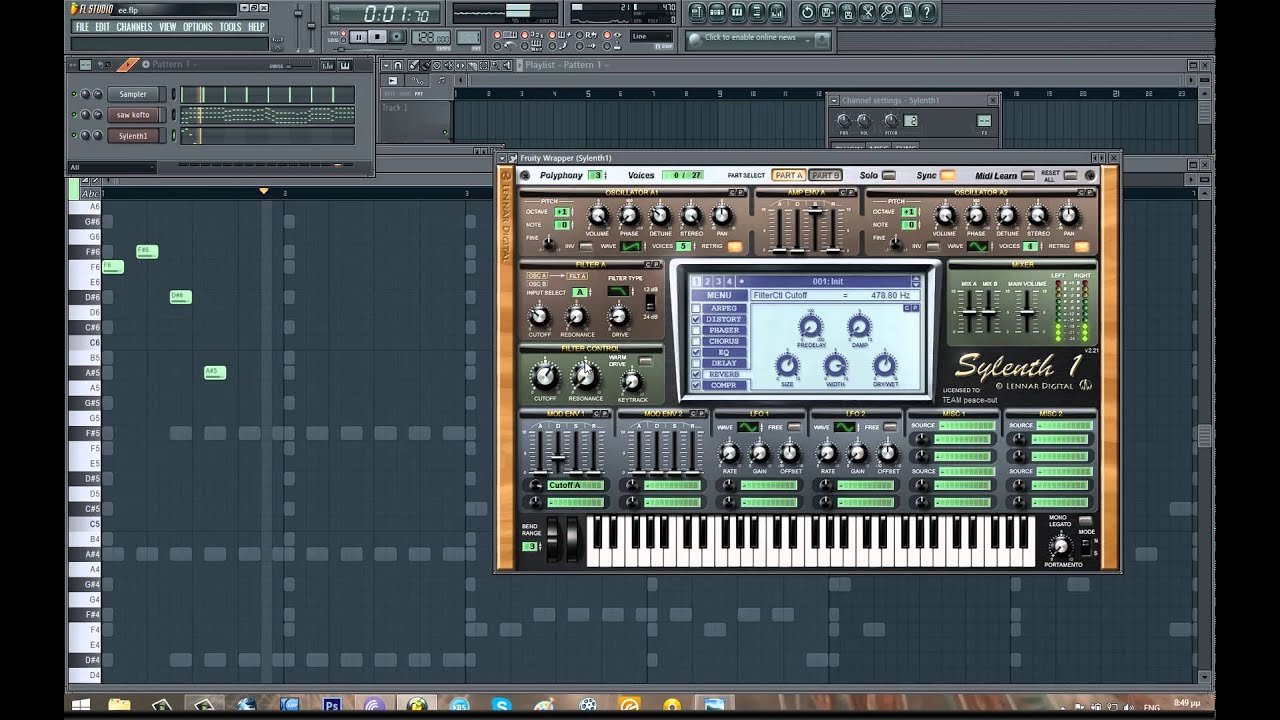
From this one might conclude that this is the smallest amount of time the measure or bar can be broken down to. In music, this would be a 16th note, 16 x 16th notes will equal 4 quarter notes, and apparently a whole measure in this software. How long is this in real time depends on how you set the tempo.There are a couple of video tutorials about FL Studio so google away to see if these will assist too. @RavenDreamer As filzilla has said, that depends on the tempo (BPM or beats per minute), the time signature (number of beats per measure) and the number of steps per beat. Here is a quick formula: 60/(BPM. ) This will give you the time in seconds per step. For 60BPM, 4/4 time signature and 16th note resolution: first divide the resolution by the bottom number of the time signature to get steps per beat (16/4=4).

This gives us 60/(60. 4) or 1/4 second or 250ms per step.–Apr 11 '12 at 13:13.

14 Musical Works In The Most Unusual Time Signatures. The use of odd-time signatures, and frequently changing time signatures from measure to measure, came into popular Western music in the late 1800s and early 1900s through classical music pieces written by composers including Bela Bartok, Igor Stravinsky, and others. Re: FL Studio Time Signatures whats wrong with just using alt+t to add markers. It keeps everything organised and pretty much enables you to do away with the grid, thus enableing you to flex your f'd up time signature muscles.