Fungsi Disable Sip Mac
.The Dynamic Host Configuration Protocol ( DHCP) is a used on networks whereby a DHCP server dynamically assigns an and other network configuration parameters to each device on a network so they can communicate with other IP networks. A DHCP server enables computers to request IP addresses and networking parameters automatically from the (ISP), reducing the need for a or a user to manually assign IP addresses to all network devices. In the absence of a DHCP server, a computer or other device on the network needs to be manually assigned an IP address, or to assign itself an address, which will not enable it to communicate outside its local subnet.DHCP can be implemented on networks ranging in size from to large and regional networks. A or a can be enabled to act as a DHCP server. Most residential network routers receive a globally unique IP address within the ISP network. Within a local network, a DHCP server assigns a local IP address to each device connected to the network.
Mar 17, 2019 - Photoshop Mac adalah software design graphics populer terbaru untuk Mac. Selain itu, banyak tambahan fungsi interface yang dikembangkan. Keatas, jangan lupa untuk Disable SIP dan Allow Apps; Unzip file download. Nov 10, 2018 2. Disable the SIP. If the SIP status is enabled, we need to turn it off. SIP(System Integrity Protection) cause sudo privilege, root user enabled, and admin access have no function. Disable the SIP is safe, once you are done with the steps, you can re-enable it. Step #1: Reboot your Mac. Click the menu on your Mac and select Restart. 1 Introduction. GNU nano is a small and friendly text editor. Besides basic text editing, nano offers many extra features like an interactive search and replace, go to line and column number, auto-indentation, feature toggles, internationalization support, and filename tab completion.
Contents.History In 1984, the (RARP), defined in, was introduced to allow simple devices such as to dynamically obtain a suitable IP address. However, because it acted at the it made implementation difficult on many server platforms, and also required that a server be present on each individual network link.
RARP was superseded by the Bootstrap Protocol defined in in September 1985. This introduced the concept of a relay agent, which allowed the forwarding of BOOTP packets across networks, allowing one central BOOTP server to serve hosts on many IP subnets.DHCP is based on BOOTP but can dynamically allocate IP addresses from a pool and reclaim them when they are no longer in use. It can also be used to deliver a wide range of extra configuration parameters to IP clients, including platform-specific parameters. DHCP was first defined in in October 1993; but due to errors in the editorial process was almost immediately reissued as.Four years later the DHCPINFORM message type and other small changes were added by; which as of 2014 remains the standard for IPv4 networks.was initially described by in 2003, but this has been updated by many subsequent RFCs. Added a DHCPv6 mechanism for, and was added by.DHCP versions In the case of DHCP, there are several RFC standards, and the version numbers individually such as DHCP v2 and v3 are not specified differently from SNMP v1, v2 and v3 in the RFC standard. However, the ISC (Internet Software Consortium) DHCP server that functions as a common DHCP server has version V1, V2, and V3 in the form release 1, release 2 and release 3.
ISC DHCP Release 1 (version 1): It is a more stable version with a bug fix over the initial release(beta) ISC DHCP server after 2 years. ISC DHCP Release 2 (version 2): DHCP Release 2 is composed of DHCP server, DHCP client and DHCP relay agent.
Features include support for ping before IP allocation, and more effective prevention of errors in DHCP authentication. ISC DHCP Release 3 (version 3): The key features of Release 3 include the ability to selectively initialize DHCP server functionality and to bundle clients that are assigned IPs into desired configuration units.
In addition, since the relay agent information is selectively available, it is possible to separately manage the POOLs that are the groups to which the IP addresses are assigned, by the necessary group units. It enables the ability to leverage dynamic DNS information and DHCP authentication. Hongfire artificial academy 2 patch. The standard for IPv6 DHCP is defined by RFC, and the latest version is defined by DHCPv6 -, which includes IPv6 address Stateless autoconfiguration.Overview defines how devices on one network communicate with devices on another network, and the DHCP server can manage UDP/IP settings for devices on a network, by automatically or dynamically assigning IP addresses to the devices.The DHCP operates based on the. When a computer or other device connects to a network, the DHCP client software sends a DHCP query requesting the necessary information. Any DHCP server on the network may service the request. The DHCP server manages a pool of IP addresses and information about client configuration parameters such as, the,.
On receiving a DHCP request, the DHCP server may respond with specific information for each client, as previously configured by an administrator, or with a specific address and any other information valid for the entire network and for the time period for which the allocation ( lease) is valid. A DHCP client typically queries for this information immediately after, and periodically thereafter before the expiration of the information. When a DHCP client refreshes an assignment, it initially requests the same parameter values, but the DHCP server may assign a new address based on the assignment policies set by administrators.On large networks that consist of multiple links, a single DHCP server may service the entire network when aided by DHCP relay agents located on the interconnecting routers. Such agents relay messages between DHCP clients and DHCP servers located on different subnets.Depending on implementation, the DHCP server may have three methods of allocating IP addresses:Dynamic allocation A reserves a range of IP addresses for DHCP, and each DHCP client on the is configured to request an IP address from the DHCP during network initialization.
How To Disable Sip
The request-and-grant process uses a lease concept with a controllable time period, allowing the DHCP server to reclaim and then reallocate IP addresses that are not renewed. Automatic allocation The DHCP server permanently assigns an IP address to a requesting client from the range defined by the administrator.
This is like dynamic allocation, but the DHCP server keeps a table of past IP address assignments, so that it can preferentially assign to a client the same IP address that the client previously had. Manual allocation (commonly called static allocation) The DHCP server issues a private IP address dependent upon each client's client id (or, traditionally, the client ), based on a predefined mapping by the administrator. This feature is variously called static DHCP assignment by, fixed-address by the dhcpd documentation, address reservation by Netgear, DHCP reservation or static DHCP by and, and IP address reservation or MAC/IP address binding by various other router manufacturers.
If no match for the client's client ID (if provided) or (if no client id is provided) is found, the server may or may not optionally fall back to either Dynamic or Automatic allocation.DHCP is used for (IPv4). While both versions serve the same purpose, the details of the protocol for IPv4 and IPv6 differ sufficiently that they may be considered separate protocols. For the IPv6 operation, devices may alternatively use. IPv6 hosts may also use to achieve operations restricted to the local network link.Operation.
An illustration of a typical non-renewing DHCP session; each message may be either a broadcast or a, depending on the DHCP client capabilities.The DHCP employs a service model, using the (UDP). It is implemented with two UDP port numbers for its operations which are the same as for the bootstrap protocol. UDP port number 67 is the destination port of a server, and UDP port number 68 is used by the client.DHCP operations fall into four phases: server discovery, IP lease offer, IP lease request, and IP lease acknowledgement. These stages are often abbreviated as DORA for discovery, offer, request, and acknowledgement.The DHCP operation begins with clients a request. If the client and server are on different subnets, a may be used. Clients requesting renewal of an existing lease may communicate directly via UDP, since the client already has an established IP address at that point.
Additionally, there is a BROADCAST flag (1 bit in 2 byte flags field, where all other bits are reserved and so are set to 0) the client can use to indicate in which way (broadcast or unicast) it can receive the DHCPOFFER: 0x8000 for broadcast, 0x0000 for unicast. Usually, the DHCPOFFER is sent through unicast. For those hosts which cannot accept unicast packets before IP addresses are configured, this flag can be used to work around this issue.DHCP discovery The DHCP client broadcasts a DHCPDISCOVER message on the network subnet using the destination address 255.255.255.255 (limited broadcast) or the specific subnet broadcast address (directed broadcast). A DHCP client may also request its last known IP address. If the client remains connected to the same network, the server may grant the request. Otherwise, it depends whether the server is set up as authoritative or not.
An authoritative server denies the request, causing the client to issue a new request. A non-authoritative server simply ignores the request, leading to an implementation-dependent timeout for the client to expire the request and ask for a new IP address.For example, if HTYPE is set to 1, to specify that the medium used is, HLEN is set to 6 because an Ethernet address (MAC address) is 6 octets long. The CHADDR is set to the MAC address used by the client. 1 (Request Subnet Mask),. 3 (Router),.
15 (Domain Name),. 6 (Domain Name Server)0xff 255 (Endmark)DHCP offer When a DHCP server receives a DHCPDISCOVER message from a client, which is an IP address lease request, the DHCP server reserves an IP address for the client and makes a lease offer by sending a DHCPOFFER message to the client. This message contains the client's client id (traditionally a MAC address), the IP address that the server is offering, the subnet mask, the lease duration, and the IP address of the DHCP server making the offer. The DHCP server may also take notice of the hardware-level MAC address in the underlying transport layer: according to current the transport layer MAC address may be used if no client ID is provided in the DHCP packet.The DHCP server determines the configuration based on the client's hardware address as specified in the CHADDR (client hardware address) field. 9.7.10.15,. 9.7.10.16,. 9.7.10.18DHCP request In response to the DHCP offer, the client replies with a DHCPREQUEST message, broadcast to the server, requesting the offered address.
A client can receive DHCP offers from multiple servers, but it will accept only one DHCP offer. 9.7.10.15,. 9.7.10.16,. 9.7.10.18DHCP information A DHCP client may request more information than the server sent with the original DHCPOFFER. The client may also request repeat data for a particular application. For example, browsers use DHCP Inform to obtain web proxy settings via.DHCP releasing The client sends a request to the DHCP server to release the DHCP information and the client deactivates its IP address.
As client devices usually do not know when users may unplug them from the network, the protocol does not mandate the sending of DHCP Release.Client configuration parameters A DHCP server can provide optional configuration parameters to the client. Describes the available DHCP options defined by (IANA) - DHCP and BOOTP PARAMETERS.A DHCP client can select, manipulate and overwrite parameters provided by a DHCP server.
In Unix-like systems this client-level refinement typically takes place according to the values in the configuration file /etc/dhclient.conf.DHCP options Options are octet strings of varying length. The first octet is the option code, the second octet is the number of following octets and the remaining octets are code dependent.For example, the DHCP message-type option for an offer would appear as 0x35, 0x01, 0x02, where 0x35 is code 53 for 'DHCP message type', 0x01 means one octet follows and 0x02 is the value of 'offer'.Documented in The following tables list the available DHCP options, as listed in and IANA registry. See also:The base DHCP does not include any mechanism for authentication. Because of this, it is vulnerable to a variety of attacks. These attacks fall into three main categories:.
Unauthorized DHCP servers providing false information to clients. Unauthorized clients gaining access to resources. Resource exhaustion attacks from malicious DHCP clients.Because the client has no way to validate the identity of a DHCP server, unauthorized DHCP servers (commonly called ') can be operated on networks, providing incorrect information to DHCP clients. This can serve either as a denial-of-service attack, preventing the client from gaining access to network connectivity, or as a. Because the DHCP server provides the DHCP client with server IP addresses, such as the IP address of one or more DNS servers, an attacker can convince a DHCP client to do its DNS lookups through its own DNS server, and can therefore provide its own answers to DNS queries from the client. This in turn allows the attacker to redirect network traffic through itself, allowing it to eavesdrop on connections between the client and network servers it contacts, or to simply replace those network servers with its own.Because the DHCP server has no secure mechanism for authenticating the client, clients can gain unauthorized access to IP addresses by presenting credentials, such as client identifiers, that belong to other DHCP clients. This also allows DHCP clients to exhaust the DHCP server's store of IP addresses—by presenting new credentials each time it asks for an address, the client can consume all the available IP addresses on a particular network link, preventing other DHCP clients from getting service.DHCP does provide some mechanisms for mitigating these problems.
The protocol extension (, usually referred to in the industry by its actual number as Option 82 ) allows network operators to attach tags to DHCP messages as these messages arrive on the network operator's trusted network. This tag is then used as an authorization token to control the client's access to network resources. Because the client has no access to the network upstream of the relay agent, the lack of authentication does not prevent the DHCP server operator from relying on the authorization token.Another extension, Authentication for DHCP Messages , provides a mechanism for authenticating DHCP messages. As of 2002, RFC 3118 had not seen widespread adoption because of the problems of managing keys for large numbers of DHCP clients. A 2007 book about DSL technologies remarked that:there were numerous security vulnerabilities identified against the security measures proposed. This fact, combined with the introduction of, slowed the deployment and take-rate of authenticated DHCP, and it has never been widely deployed.A 2010 book notes that:there have been very few implementations of DHCP Authentication. The challenges of key management and processing delays due to hash computation have been deemed too heavy a price to pay for the perceived benefits.Architectural proposals from 2008 involve authenticating DHCP requests using or (both of which transport ).
An IETF proposal was made for including EAP in DHCP itself, the so-called EAPoDHCP; this does not appear to have progressed beyond IETF draft level, the last of which dates to 2010. ^ As an optional client behavior, some broadcasts, such as those carrying DHCP discovery and request messages, may be replaced with unicasts in case the DHCP client already knows the DHCP server's IP address. The RFC calls for the client to wait one half of the remaining time until T2 before it retransmits the DHCPREQUEST packet. The proposal provided a mechanism whereby two servers could remain loosely in sync with each other in such a way that even in the event of a total failure of one server, the other server could recover the lease database and continue operating.
Due to the length and complexity of the specification, it was never published as a standard; however, the techniques described in the specification are in wide use, with one open-source implementation in the server, as well as several commercial implementations.References.

What is System Integrity Protection?RELATED:On Mac OS X and other, including Linux, there’s a “root” account that traditionally has full access to the entire operating system. Becoming the root user — or gaining root permissions — gives you access to the entire operating system and the ability to modify and delete any file. Malware that gains root permissions could use those permissions to damage and infect the low-level operating system files.Type your password into a security dialog and you’ve given the application root permissions. This traditionally allows it to do anything to your operating system, although many Mac users may not have realized this.System Integrity Protection — also known as “rootless” — functions by restricting the root account. The operating system kernel itself puts checks on the root user’s access and won’t allow it to do certain things, such as modify protected locations or inject code into protected system processes. All kernel extensions must be signed, and you can’t disable System Integrity Protection from within Mac OS X itself.
Applications with elevated root permissions can no longer tamper with system files.You’re most likely to notice this if you attempt to write to one of the following directories:. /System. /bin.
/usr. /sbinOS X just won’t allow it, and you’ll see an “Operation not permitted” message. OS X also won’t allow you to mount another location over one of these protected directories, so there’s no way around this.The full list of protected locations is found at /System/Library/Sandbox/rootless.conf on your Mac. It includes files like the Mail.app and Chess.app apps included with Mac OS X, so you can’t remove these — even from the command line as the root user.
This also means that malware can’t modify and infect those applications, however.Not coincidentally, the “” option in — long used for troubleshooting various Mac problems — has now been removed. System Integrity Protection should prevent crucial file permissions from being tampered with, anyway. The Disk Utility has been redesigned and still has a “First Aid” option for repairing errors, but includes no way to repair permissions.How to Disable System Integrity ProtectionWarning: Don’t do this unless you have a very good reason to do so and know exactly what you’re doing!
Most users won’t need to disable this security setting. It’s not intended to prevent you from messing with the system — it’s intended to prevent malware and other badly behaved programs from messing with the system. But some low-level utilities may only function if they have unrestricted access.
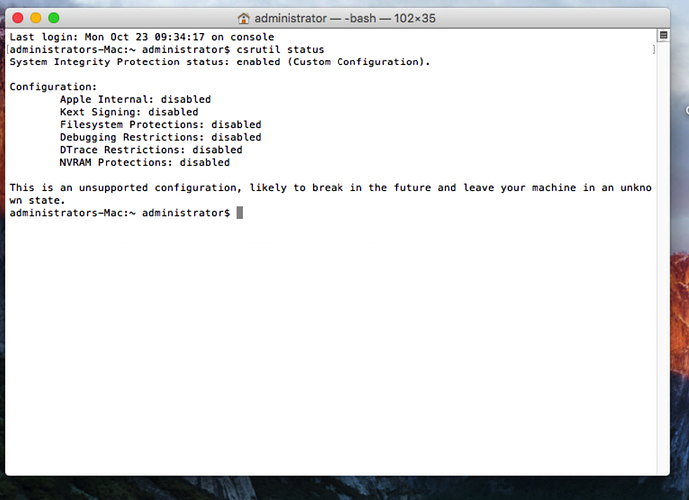
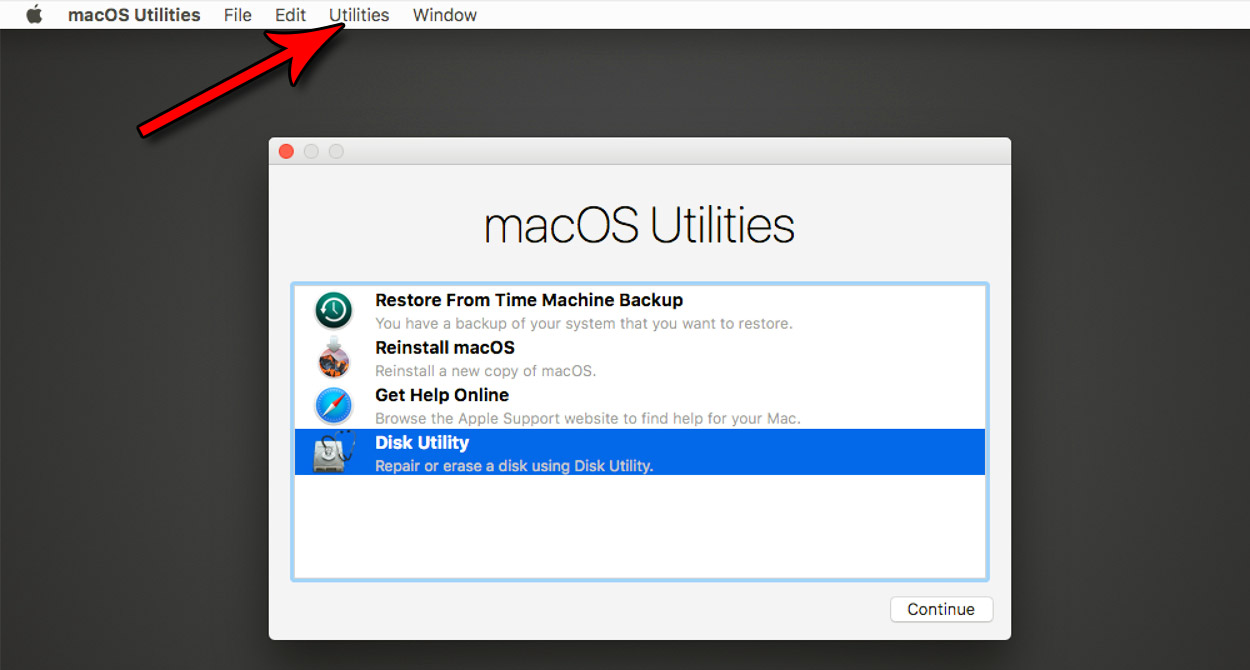
RELATED:The System Integrity Protection setting isn’t stored in Mac OS X itself. Instead, it’s stored in NVRAM on each individual Mac. It can only be modified from the recovery environment.To, restart your Mac and hold Command+R as it boots. You’ll enter the recovery environment. Click the “Utilities” menu and select “Terminal” to open a terminal window.Type the following command into the terminal and press Enter to check the status:csrutil statusYou’ll see whether System Integrity Protection is enabled or not.To disable System Integrity Protection, run the following command:csrutil disableIf you decide you want to enable SIP later, return to the recovery environment and run the following command:csrutil enableRestart your Mac and your new System Integrity Protection setting will take effect.
The root user will now have its full, unrestricted access to the entire operating system and every file.If you previously had files stored in these protected directories before you upgraded your Mac to OS X 10.11 El Capitan, they haven’t been deleted. You’ll find them moved to the /Library/SystemMigration/History/Migration-(UUID)/QuarantineRoot/ directory on your Mac.Image Credit.